The short answer
Saint Lucia’s citizenship by investment program has a bond route: USD 300,000 in National Action Government Bonds, plus fees. The bonds pay no interest and must stay registered in the applicant’s name for five years from their first issue. So separate three things before you decide: the capital you commit, the money you spend for good and the cash you may need before the hold ends.
Key takeaways
- The bond route asks for USD 300,000 for an applicant with any number of qualifying dependants, held in the applicant’s name for five years from first issue, at no interest.
- The USD 50,000 administration fee, processing and due diligence are spent; none of them becomes part of the bond.
- The affidavit of financial resources of at least USD 350,000 is evidence you provide, not another payment.
Start with three separate money buckets
Sort the transaction into three buckets, not one advertised price.
- Committed capital: the money that goes into the bond.
- Known fees: charges that never become part of the bond.
- Additional costs: amounts that depend on your household, your documents and the written quotation.
Counting the whole outlay as fees overstates the administration; counting only the fees understates the money you need.
The 2022 amendment regulations (opens in a new tab) set the same USD 300,000 for an applicant alone or with any number of qualifying dependants, for a holding period of five years. That does not make every relative eligible, and it does not remove the costs of adding people.
A household budget, not an all-in price
On 10 November 2026, the official investment page (opens in a new tab) listed a separate, non-refundable USD 50,000 administration fee for the bond route. Processing costs USD 2,000 for the main applicant and USD 1,000 for each qualifying dependant.
The March 2026 amendment regulations (opens in a new tab) set due diligence at USD 8,000 for the applicant and USD 5,000 for each qualifying dependant over 16 years of age. Processing and due diligence are both paid with the application, and the official page lists them as non-refundable.
| Line | One adult | Two adult spouses | Spouses and two children aged 8 and 12 |
|---|---|---|---|
| Bond capital | USD 300,000 | USD 300,000 | USD 300,000 |
| Administration fee | USD 50,000 | USD 50,000 | USD 50,000 |
| Processing | USD 2,000 | USD 3,000 | USD 5,000 |
| Due diligence | USD 8,000 | USD 13,000 | USD 13,000 |
| Partial subtotal | USD 360,000 | USD 366,000 | USD 368,000 |
Read each column as a funding exercise. For the family, the subtotal divides into USD 300,000 of bond capital and USD 68,000 of listed charges; adding them together does not make the charges recoverable.
Use our investment migration quotation checklist to find the lines an offer leaves out.
No interest is still a cost
A bond that pays no interest produces no income while you hold it, so the comparison is not simply a bond you hold against a contribution you pay away: it is also what else USD 300,000 could have done for five years.
The US Securities and Exchange Commission’s guide to bonds (opens in a new tab) names credit, inflation and liquidity among the risks of bonds in general. That is not a verdict on Saint Lucia’s creditworthiness; it is a reminder to examine the instrument, not only the issuer. Here the regulations (opens in a new tab) keep the bond registered in your name for the whole holding period, so plan as though that capital is out of reach for five years.
The same official page lists three other qualifying investments: an approved real estate project, an approved enterprise project and a contribution route. The contribution is the like-for-like comparison: USD 240,000 to the National Economic Fund for an applicant alone or with up to three other qualifying dependants, paid into the Fund rather than held in your name. For the same household, the contribution is spent outright; the bond route spends its USD 50,000 administration fee and ties up USD 300,000, interest free, for five years.
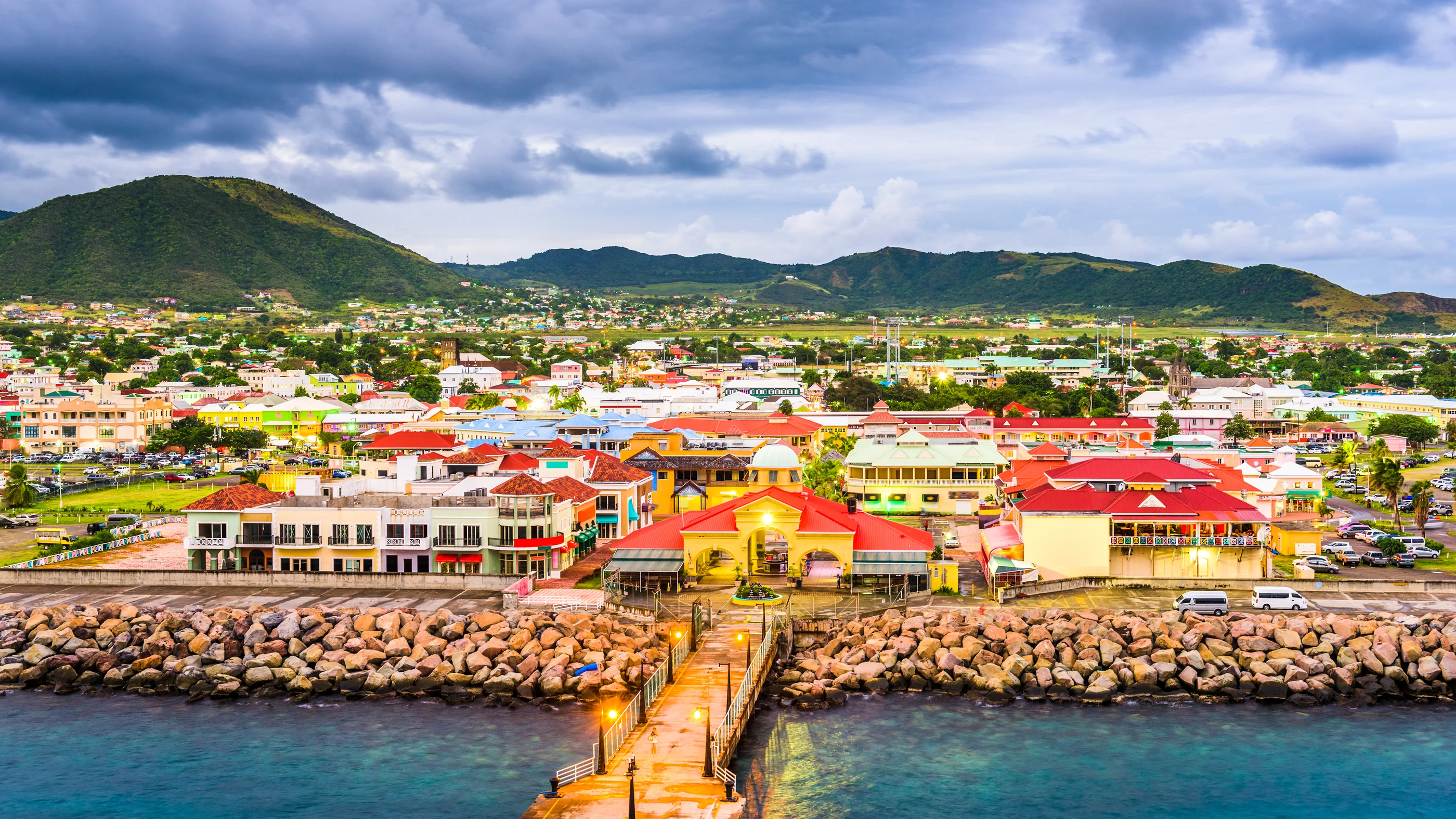
Do not offset the fees with returns you might earn elsewhere, or count a future repayment as cash available today. Our comparison of the lowest cost citizenship by investment programs is limited to the programs Wealthy Expat covers, so it does not include Saint Lucia; one Caribbean program from it is shown below.
The five-year hold starts at the bond’s first issue
The holding period runs from the bond’s first issue, not from the day you start gathering documents: the bond is bought once the application is approved, so preparation and review come before the five years.
Your spreadsheet should show the issue date, the end of the hold that follows from it and a cash reserve for earlier needs.
Before you commit, ask for the bond’s terms in writing: maturity, redemption documents, payment timing and any condition on repayment. A holding period is not a redemption procedure, so do not tie a house purchase or a business payment to an assumed repayment date.
Keep the financial evidence apart from the investment
The March 2026 regulations also require a sworn affidavit declaring financial resources of at least USD 350,000, supported, under the 2025 amendment to the Act (opens in a new tab), by documents on those resources and their source. It is evidence, not another USD 350,000 payment, and it does not replace the bond minimum.
Keep a document checklist beside the cash budget, not inside it.
Three conditions before you decide
Keep three conditions in view: enough liquid money outside the transaction, a complete itemised quotation and satisfactory bond documents. If one is missing, you have a research gap rather than a finished decision. The investment is one part of an application, not a promise of approval: the regulations say citizenship “may be granted” on the purchase, and the Citizenship by Investment Board may grant, deny or delay any application for cause.
Frequently asked questions
Can I get Saint Lucia citizenship by investing?
Yes, through one of the four qualifying investments the official program lists: a National Economic Fund contribution, National Action Government Bonds, an approved real estate project or an approved enterprise project. The bond route asks for USD 300,000 for an applicant with any number of qualifying dependants, plus fees. The Citizenship by Investment Board may grant, deny or delay an application for cause.
How long do you have to hold Saint Lucia citizenship bonds?
Five years from the date of first issue, registered in the applicant’s name and without interest. The holding period alone is not a redemption procedure, so ask for the bond’s own terms in writing.
How much does Saint Lucia citizenship by investment cost with bonds?
For one adult, the listed amounts come to USD 360,000, of which the USD 300,000 bond is capital held for five years and the rest is spent: a USD 50,000 administration fee, USD 2,000 for processing and USD 8,000 for due diligence. Each qualifying dependant adds USD 1,000 for processing, and USD 5,000 for due diligence if over 16 years of age. The total leaves out the interview charge, professional services, bank charges and travel.
Sources and methodology
- Citizenship by Investment: investment options and fees (opens in a new tab)Citizenship by Investment Unit, Saint Lucia
- Citizenship by Investment (Amendment) Regulations, 2026 (S.I. No. 57 of 2026) (opens in a new tab)National Printing Corporation, Saint Lucia · 23 Mar 2026
- Citizenship by Investment (Amendment) (No. 2) Regulations, 2022 (S.I. No. 222 of 2022), Extraordinary Gazette (opens in a new tab)National Printing Corporation, Saint Lucia · 30 Dec 2022
More sources (3)
- Citizenship by Investment Regulations (S.I. No. 89 of 2015), regulation 12 (opens in a new tab)National Printing Corporation, Saint Lucia · 02 Oct 2015
- Citizenship by Investment (Amendment) Act, 2025 (No. 22 of 2025) (opens in a new tab)National Printing Corporation, Saint Lucia · 10 Nov 2025
- Bonds: FAQs (opens in a new tab)US Securities and Exchange Commission, Investor.gov